

Leveraging Stepper Motors and Lead Screws for Precision Movement
In the field of motion control and automation, combining stepper motors with lead screw systems has become a popular solution for achieving high precision in movement. Stepper motors offer precise control over rotation and positioning, while lead screws enable linear motion with minimal backlash. This article explores how these components work together, their applications, advantages, and considerations when implementing such systems.
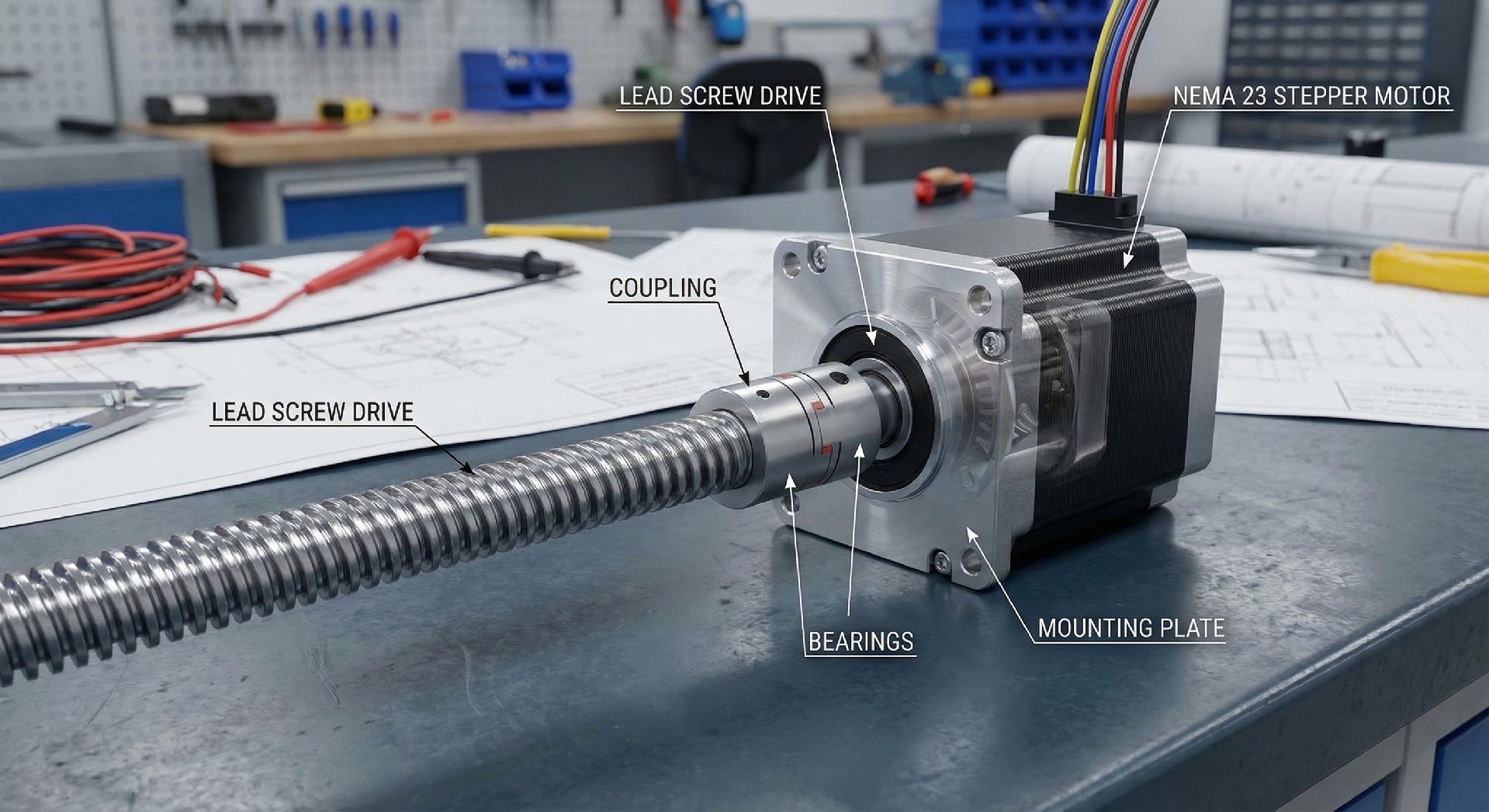
Understanding Stepper Motors
Stepper motors convert electrical pulses into precise mechanical movement. Each pulse creates a specific angle of rotation, enabling the motor to move in discrete steps. The inherent design of stepper motors allows for open-loop control, which is capable of precise positioning without the need for feedback mechanisms.
Working Principle
The stepper motor operates on the principle of electromagnetism. When a sequence of electrical pulses is applied, the rotor turns an exact number of steps, allowing for accurate positioning and control. This characteristic is particularly advantageous in applications where precise positioning is critical.
Lead Screw Mechanics
Lead screws are linear motion devices that convert rotary motion into linear displacement. They are commonly used in conjunction with stepper motors to create systems that require reliable and repeatable linear movements. The combination of the two provides an effective solution for many automated systems.
Types of Lead Screws
There are various types of lead screws, including:
Acme Lead Screws: Known for their strength and durability, making them suitable for heavy loads.
Ball Screws: Providing higher efficiency and lower friction, ideal for precision applications.
Trapezoidal Lead Screws: Offering a balance between strength and performance, often used in industrial applications.
To explore stepper motor solutions for your projects, visit our Two-Phase Open Loop Motor.
Advantages of Combining Stepper Motors and Lead Screws
Integrating stepper motors with lead screws provides numerous advantages:
High Precision
The combination offers enhanced accuracy in linear movements, crucial for applications such as CNC machining, 3D printing, and robotics.
Low Backlash
Lead screws can be designed to minimize backlash, ensuring that the motion is more precise and repeatable, which is critical in many automated processes.
Simplified Control
The open-loop control of stepper motors simplifies the design of the overall system, making it easier to integrate and program, especially in smaller applications where feedback systems are impractical.
Cost Efficiency
Combining these systems can be more cost-effective than alternatives like servo motors and rack-and-pinion setups, particularly in lower-load applications.
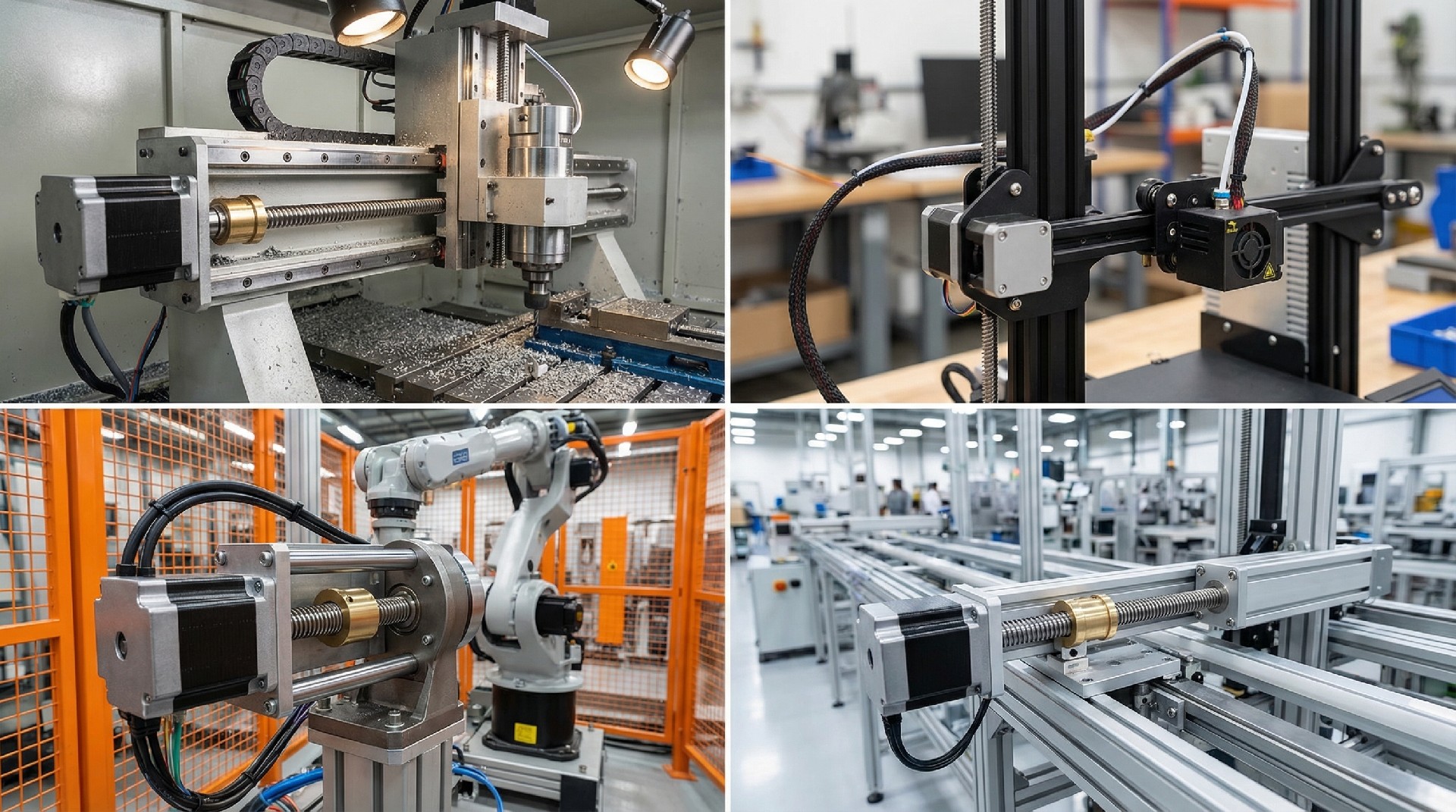
Applications in Automation and Robotics
The pairing of stepper motors and lead screws has seen widespread application across various industries, including:
3D Printing
3D printers utilize this combination extensively to achieve precise layer deposition, enhancing the accuracy and resolution of printed objects.
CNC Machines
In CNC applications, controlling the movement of the cutting tool is crucial. The stepper and lead screw setup provides the necessary precision for intricate cuts.
Robotics
Robotic arms and linear actuators integrate stepper motors and lead screws to achieve accurate movement and positioning in assembly lines and automated processes.
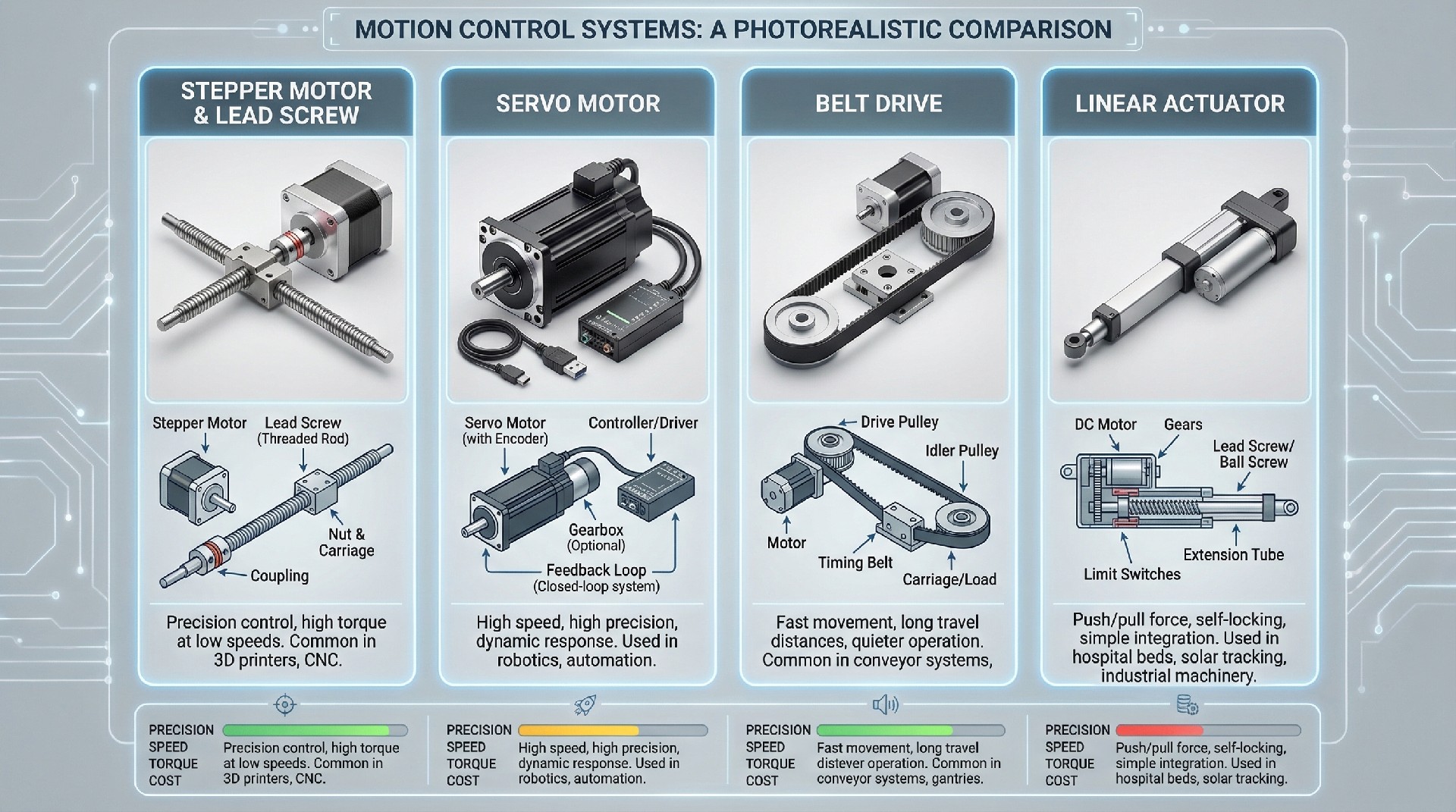
For a deeper understanding of including motion control in your designs, refer to our resource on stepper motor vs servo motor selection.
Technical Considerations When Implementing Stepper Motors with Lead Screws
When considering the integration of stepper motors and lead screws, several technical parameters must be addressed:
Torque Requirements
Understanding the required torque for the application is critical. Ensure that the selected stepper motor can provide enough torque to move the load efficiently.
Load Calculations
Calculating the load that will be moved helps determine the appropriate sizing of both the stepper motor and the lead screw. This can impact performance and longevity.
Speed and Acceleration
Evaluate the operational speed and acceleration profiles to ensure that the system will perform as needed throughout its task.
Refer to our engineering selection guide for detailed calculations.
Conclusion
The integration of stepper motors and lead screws is a hallmark of modern automation solutions, providing precision, efficiency, and reliability. By understanding the mechanics and characteristics of both components, engineers can create enhanced systems suitable for various applications. HDBMotor is committed to providing high-quality stepper motors designed to meet the specific needs of your projects.
Frequently Asked Questions
Question 1
What are the common applications for stepper motors and lead screws?
Stepper motors and lead screws are commonly used in 3D printers, CNC machines, and robotic systems where precise linear movements are essential.
Question 2
How do I determine the right torque for my application?
To determine the required torque, consider the load requirements of your application, including the inertia of the load and the speed at which you intend to operate.
Question 3
What is backlash, and why is it important?
Backlash refers to the allowance between the screw and the nut, which can affect precision. Minimizing backlash is crucial for applications requiring high accuracy.
Question 4
Can I use stepper motors with other types of linear motion devices?
Yes, stepper motors can also be used with linear actuators and belts, although lead screws often provide a better balance of precision and cost for many applications.
Question 5
How do I control the speed of a stepper motor effectively?
The speed can be controlled using pulse-width modulation (PWM) signals or dedicated driver circuits that manage the power delivery to the stepper motor.
Question 6
What factors should I consider when selecting a lead screw?
Considerations include the load capacity, screw type (acme, ball, trapezoidal), length, and pitch based on the application requirements.
Question 7
Is it necessary to use a feedback system with stepper motors and lead screws?
While not necessary, using a feedback system can enhance precision, especially in applications requiring high levels of accuracy and repeatability.