

Choosing the Right Stepper Motor Driver and Controller: A Comprehensive Guide
Stepper motors require precise control to function effectively in various applications. The role of the stepper motor driver and controller is crucial in achieving that precision. This guide explores the important factors to consider when selecting a stepper motor driver and controller, providing insights that will enable you to make informed decisions for your projects.
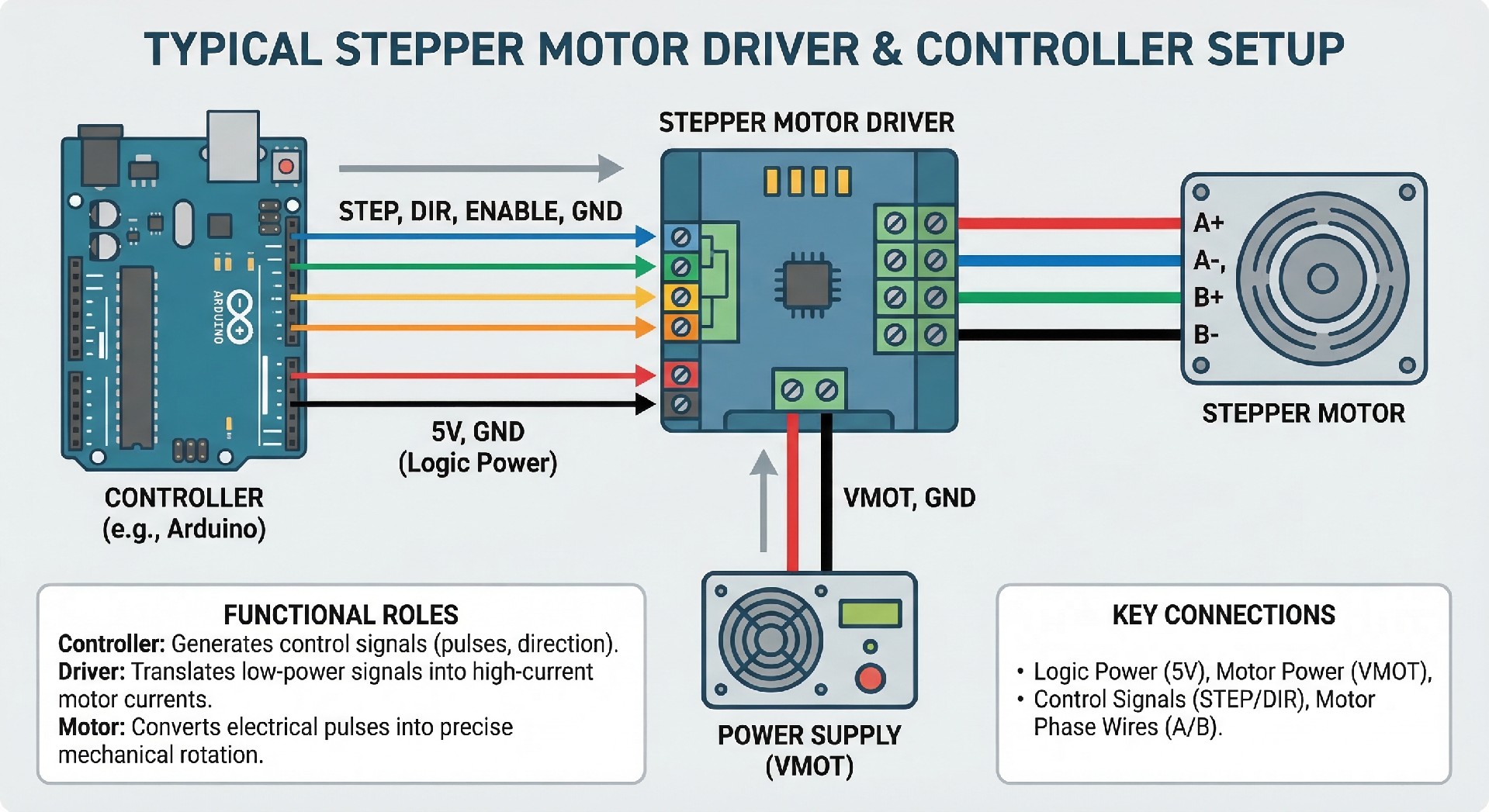
Understanding Stepper Motor Drivers
A stepper motor driver is an electronic device that controls the movement of stepper motors by regulating the power supplied to them. The driver receives input from a controller, ensuring that the motor turns in accurate steps.
Functionality of Stepper Motor Drivers
Current Control: Manages the current supplied to the motor to prevent overheating.
Microstepping: Allows for smoother motor operation and higher positional precision through the division of each step.
Direction Control: Enables the motor to turn clockwise or counterclockwise based on the commands received.
To learn more about stepper motor solutions, check out our Two-Phase Open Loop Motor.
The Role of Controllers
While the driver executes the commands, the controller determines the operation's parameters. Controllers process the information and send commands to the driver to control timing and direction.
Types of Controllers
Microcontrollers: These compact devices can be programmed to control multiple motors and respond to input sensors.
PC-Based Controllers: Used in advanced applications where complex calculations and control sequences are necessary.
Integrated Systems: Some systems incorporate controllers and drivers into one unit for simplicity and compactness.
Selecting the Right Stepper Motor Driver
When choosing a stepper motor driver, consider key features:
Key Features to Evaluate
Voltage Rating: Ensure it matches your motor’s specifications for optimal performance.
Current Rating: Should adequately supply the motor without overheating.
Microstepping Capabilities: Higher microstepping allows for smoother motion control and fine positioning.
Comparison Table: Popular Stepper Motor Drivers
| Driver Model | Voltage Range | Current Rating (A) | Microstepping | Applications |
|---|---|---|---|---|
| DM542T | 20-50 VDC | 4.2 | Up to 256 | CNC Machines |
| A4988 | 8-35 VDC | 2.0 | Up to 16 | 3D Printers |
| DRV8825 | 8.2-45 VDC | 2.2 | Up to 32 | Robotic Applications |
Evaluating Stepper Motor Controllers
The controller's sophistication impacts your stepper motor's performance. More advanced controllers can facilitate complex sequences and integrate with various sensors and systems.
Software Compatibility
Ensure your controller is compatible with your existing systems and can be easily programmed or integrated into your workflow. Look for software that supports user-friendly programming options and troubleshooting capabilities.
Troubleshooting Common Issues
When working with stepper motor drivers and controllers, you may encounter typical issues:
Common Problems
Overheating: Often due to overcurrent settings or improper cooling. Regular checks on current settings are essential.
Loss of Steps: Can occur if the stepper is unable to keep up with the commanded movement, typically remedied by adjusting speed and acceleration settings.
Unresponsive Motor: Ensure all connections are intact and verify the control signals are properly configured.
For troubleshooting solutions, you can refer to our guide on reducing stepper motor noise.
Conclusion
Choosing the right stepper motor driver and controller is essential for the effective operation of your stepper motors. By understanding their functionalities, evaluating critical features, and being aware of common issues, you can optimize your systems to achieve the desired performance. HDBMotor offers a range of high-quality stepper motors, drivers, and controllers to suit your needs.
Frequently Asked Questions
Question 1
What is the main function of a stepper motor driver?
The primary function of a stepper motor driver is to control the movement of the motor by managing power supply and executing commands from the controller.
Question 2
How do I determine the appropriate voltage for my driver?
Select a driver with a voltage rating compatible with your motor's specifications and based on the performance requirements of your application.
Question 3
What are microstepping capabilities, and why are they important?
Microstepping allows drivers to split a full step into smaller increments, resulting in smoother motion and improved positioning accuracy.
Question 4
Can I use any controller with my stepper motor driver?
Not all controllers are compatible with every driver; ensure that the controller can provide required signals and is suited for your specific motor driver.
Question 5
What should I do if my motor overheats?
Check your current settings on the driver, ensure proper cooling methods are in place, and confirm that the motor isn't overloaded beyond its specification.
Question 6
How often should I maintain my stepper motor and driver?
Regular maintenance is essential; check connections and clean components periodically to ensure optimal performance.
Question 7
What applications typically use stepper motor drivers and controllers?
Stepper motor drivers and controllers are commonly used in CNC machines, 3D printers, robotics, and various automation systems.