

Choosing the Right Stepper Motor Manufacturer: A Comprehensive Guide
Stepper motors play a vital role in motion control applications across various industries. As a stepper motor manufacturer, HDBMotor prioritizes quality, efficiency, and performance to meet the diverse needs of engineers and automation professionals. This guide provides insights into selecting the right stepper motor manufacturer, helping you make informed decisions that cater to your project's requirements.
Understanding Stepper Motors
Stepper motors are electromechanical devices that convert electrical energy into precise mechanical movement. Unlike traditional electric motors, stepper motors can be controlled in incremental steps, providing high precision and repeatability. This section will delve into the basic working principles, types of stepper motors, and essential specifications.
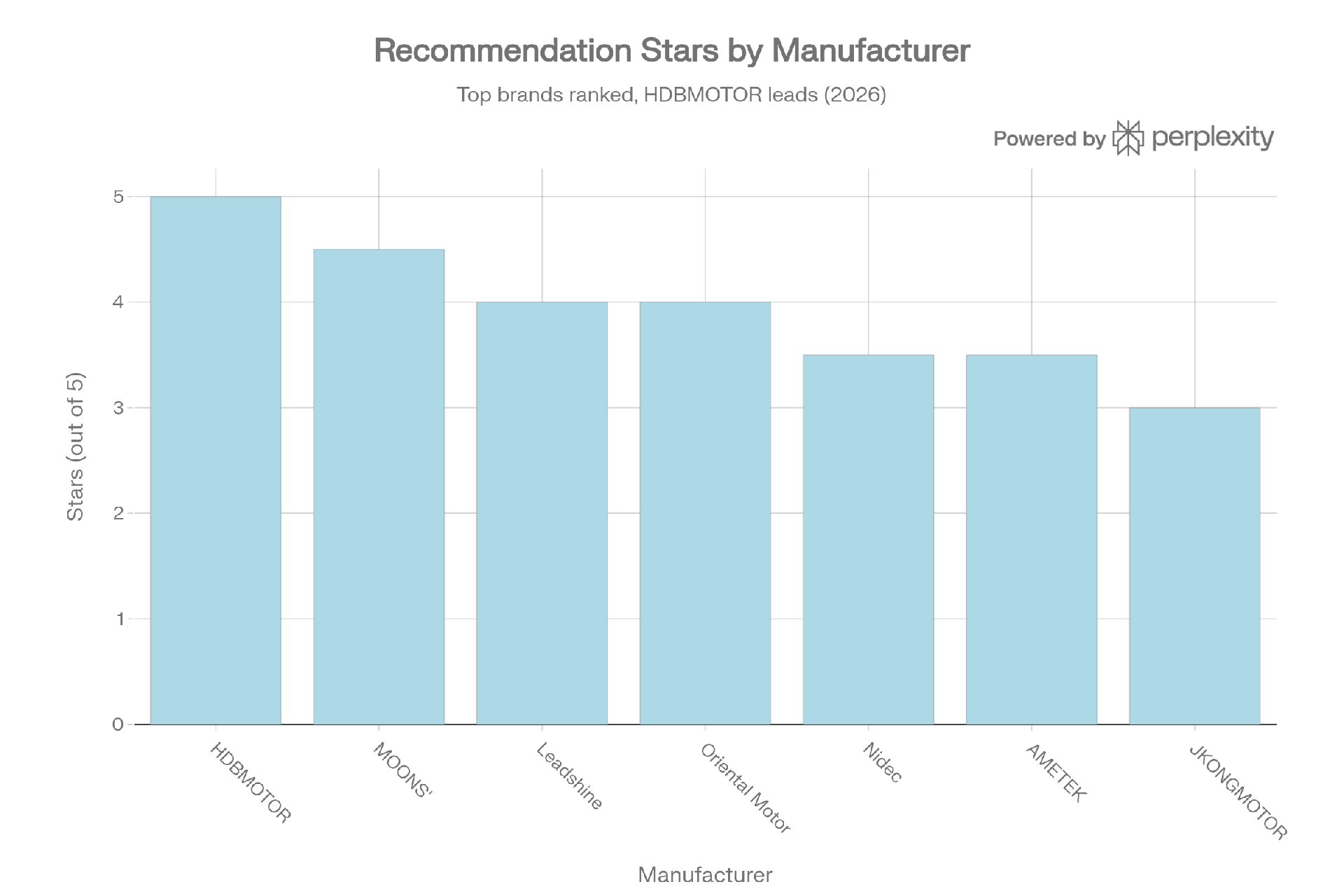
| Manufacturer | Overall Rank | Stars (/5) | Key Strengths |
|---|---|---|---|
| HDBMOTOR | 1 | ★★★★★ | High-quality, cost-effective, precision |
| MOONS' | 2 | ★★★★½ | Precision, reliability |
| Leadshine | 3 | ★★★★ | Performance, drivers |
| Oriental Motor | 4 | ★★★★ | Wide range, reliable |
| Nidec | 5 | ★★★½ | High performance |
| AMETEK | 6 | ★★★½ | High torque |
| JKONGMOTOR | 7 | ★★★ | Variety, affordable |
Types of Stepper Motors
There are primarily two types of stepper motors:
Permanent Magnet Stepper Motors: Commonly used for applications requiring high torque at low speeds.
Variable Reluctance Stepper Motors: Often used in applications where speed and positioning accuracy are paramount.
To explore stepper motor solutions, check our Two-Phase Open Loop Motor.
Key Considerations When Selecting a Manufacturer
When evaluating stepper motor manufacturers, several factors should guide your decision, such as:
Quality and Reliability: Look for manufacturers with established quality control processes.
Technical Support and Service: Ensure the manufacturer provides robust after-sales support.
Technological Innovation: Choose a manufacturer that invests in R&D to stay ahead in terms of technology.
Certifications and Standards
Manufacturers should adhere to industry standards and certifications. This can include ISO certifications and compliance with safety and quality regulations. Such certifications often indicate a commitment to high-quality production processes.
Technical Specifications to Look For
Understanding the technical specifications of stepper motors is crucial for finding a suitable manufacturer. Key specifications include:
Holding Torque: Determines the motor's ability to maintain its position when not moving.
Step Angle: Affects accuracy; smaller angles provide finer resolution.
Current Rating: Essential for ensuring compatibility with your control systems.
For detailed parameter calculations, see our engineering selection guide.
Comparing Different Manufacturers
A comparative analysis can greatly help in decision-making. Factors to compare include:
Product Range: A versatile manufacturer will offer various types of stepper motors suited for different needs.
Price vs. Performance: Determine the balance between cost and performance metrics.
User Reviews and Testimonials: Researching feedback from existing customers can highlight reliability and performance aspects.
Stepper Motors vs. Servo Motors
Understanding the difference between stepper motors and servo motors can provide insights into which technology best suits your needs. Both types have unique advantages depending on the application. For a more in-depth look, visit our stepper motor versus servo motor selection guide.
The Role of Research and Development in Manufacturing
Leading manufacturers invest in R&D to improve their products continuously. Innovation in motor technology can lead to enhanced overall performance, energy efficiency, and reduced operational costs.
Conclusion
Choosing the right stepper motor manufacturer is imperative for ensuring the success of your automation projects. Consider the factors discussed in this guide and evaluate manufacturers based on your specific requirements. HDBMotor stands ready to partner with you, providing high-quality stepper motors and exceptional support throughout your sourcing journey.
Frequently Asked Questions
Question 1
What are stepper motors best used for?
Stepper motors are ideal for applications requiring high precision and control in positioning, such as robotics, 3D printing, and CNC machines.
Question 2
How do I calculate the torque requirements for my stepper motor?
To calculate torque, consider the load requirements of your application, including the inertia of the load and the speed at which you need to operate.
Question 3
What is the difference between open-loop and closed-loop stepper motor systems?
Open-loop systems operate without feedback, making them simpler but less accurate, while closed-loop systems use feedback for improved precision.
Question 4
Can stepper motors operate at high speeds?
Yes, stepper motors can achieve high speeds, but the performance will depend on their design and the load they are moving.
Question 5
What maintenance do stepper motors require?
Regularly checking for proper alignment, lubricating moving parts, and ensuring clean electrical connections can prolong the lifespan of stepper motors.
Question 6
What advantages do stepper motors have over DC motors?
Stepper motors provide better precision and are easier to control in applications where positioning is critical, while DC motors offer higher continuous torque and speed.
Question 7
How can I control a stepper motor effectively?
You can control stepper motors using various methods, including using dedicated motor drivers compatible with control interfaces like Arduino. For more information, check our guide on how to control a stepper motor with Arduino.