

In the modern landscape of precision automation, understanding the servo motor working principle is fundamental for engineers looking to optimize production efficiency. A servo motor—often called an actuator motor—is a sophisticated device engineered to convert electrical input signals into highly precise angular displacement. At HDBMOTOR, we recognize that choosing the right motor isn’t just about power; it is about achieving the exactness required to keep your operations running without error.
1. The Core Definition of a High-Performance Servo
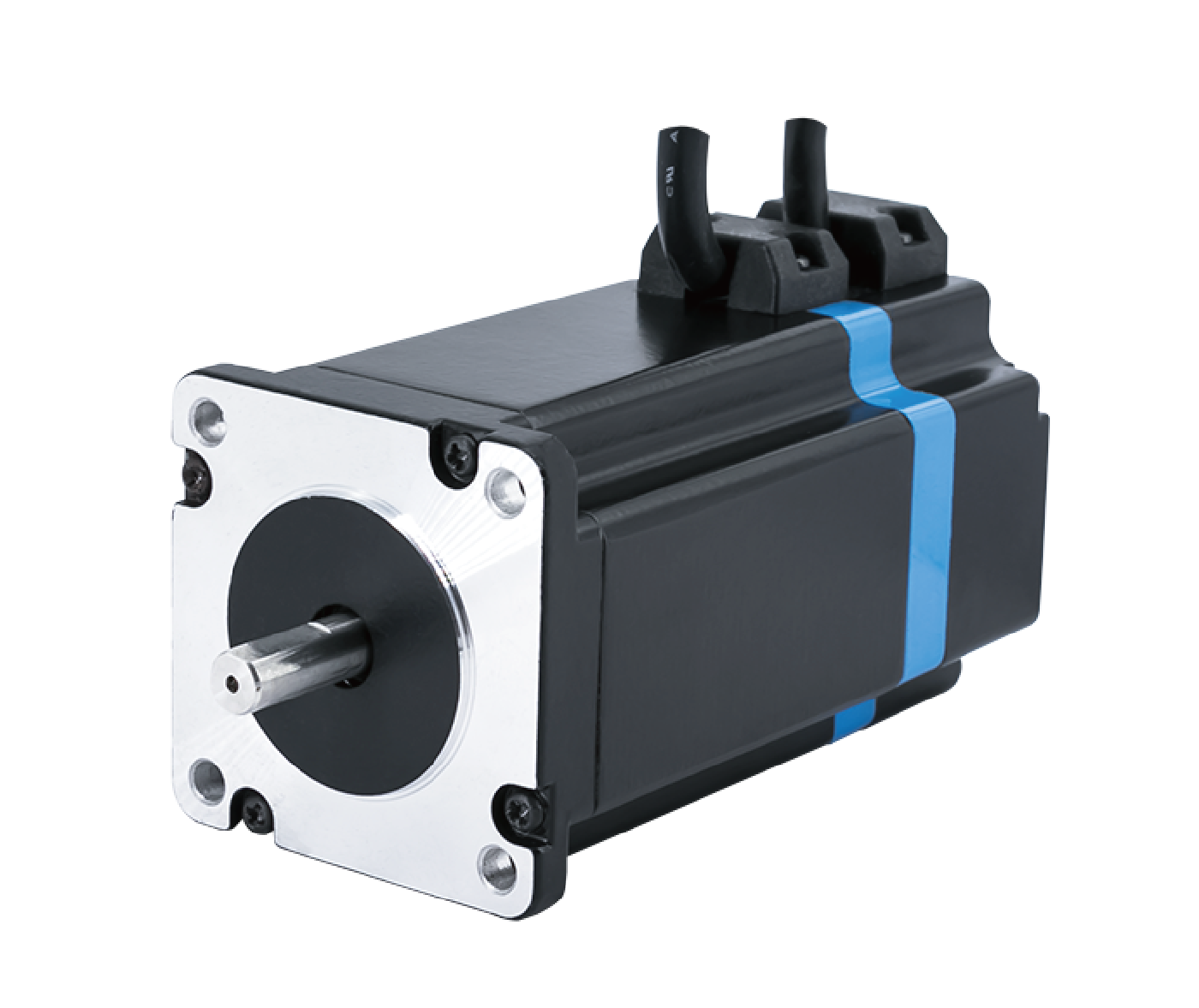
At its heart, an HDBMOTOR servo is a specialized engine designed to control mechanical components with extreme accuracy. Unlike standard motors that spin freely when power is applied, our servo systems act as auxiliary motor indirect transmission devices. The primary characteristic that sets HDBMOTOR apart is the total absence of “self-rotation” when the signal voltage is zero. This ensures that your machinery stops exactly where it is supposed to, preventing costly mechanical collisions and timing errors.
2. Mastering Feedback Loops for Precision
To truly excel at understanding the servo motor working principle, one must look at the closed-loop feedback system. This is where HDBMOTOR solves common industrial positioning problems. The output shaft of the motor is connected to a linear proportional potentiometer or encoder. This component detects the current position and feeds a proportional voltage back to the control board.
The control board compares this feedback with the input control pulse. If a discrepancy exists, the system generates a “correction pulse,” driving the motor forward or backward until the error is eliminated. This constant self-correction means that HDBMOTOR products achieve a level of precision that open-loop systems simply cannot match. For more detailed engineering standards on these feedback systems, you can explore the IEEE Xplore library for technical papers.
3. Classification: Finding the Right HDBMOTOR Solution
When understanding the servo motor working principle, it is vital to select the correct power classification for your specific application:
AC Servo Motors: These are the workhorses of the industrial world. HDBMOTOR’s AC range typically features two-phase motors with high rotor resistance and low rotational inertia. Using “hollow cup” rotors made of thin aluminum alloy (0.2-0.3mm), these motors provide the fast response times required for high-speed assembly.
DC Servo Motors: These are optimized for simpler control environments. By adjusting the control voltage, users can manipulate both speed and direction with ease. HDBMOTOR DC servos are versatile for smaller-scale precision tasks where cost-effective control is a priority.
4. Solving the “Self-Rotation” Problem
A frequent pain point in automation is “coasting” or drifting. Understanding the servo motor working principle explains how we solve this: a standard induction motor may continue to spin after power is cut due to residual inertia. However, an HDBMOTOR is engineered to stop immediately. By utilizing high rotor resistance, we shift the torque-speed curve so the motor cannot maintain rotation without an active control signal. This feature is critical for safety and precision in robotic arm movements and CNC machining.
5. Essential Requirements for Industrial Success
For any automatic control system to be successful, the servo motor must satisfy five rigorous criteria that HDBMOTOR builds into every product:
Wide Speed Regulation: Smooth adjustment across a vast range.
Linear Characteristics: Ensuring stability in mechanical output.
Zero Self-Rotation: Immediate cessation of movement upon signal loss.
High Starting Torque: The power to move heavy loads from a standstill.
Fast Electromechanical Response: Minimizing the time constant for sensitive tasks.
At HDBMOTOR, we don’t just provide hardware; we provide solutions to your motion control challenges. Whether you are dealing with positioning errors or response lags, our technical team is ready to assist you in selecting the perfect motor for your project.
**Contact Us Today for a Custom Quote and Technical Support**
Conclusion
Understanding the servo motor working principle reveals why these components are the backbone of modern robotics. By utilizing HDBMOTOR’s sophisticated feedback loops and specialized rotor designs, you gain the reliability and precision required for the most demanding technical environments.
Recommended Articles:
How to Control Stepper Motor Speed