

China has become a major global sourcing base for hybrid stepper motors, integrated motion systems, and planetary geared stepper assemblies. For OEM buyers, choosing among hundreds of factories is less about finding the lowest quote and more about identifying stable engineering partners.
This guide focuses not only on notable manufacturers—including HDBMotor, Leadshine, MOONS’, JMC, Wantai, STEPPERONLINE and others—but also on how buyers should evaluate torque consistency, driver compatibility, quality systems, export capability, and customization depth.
Top 25 Stepper Motor Manufacturers in China (Comparison Snapshot)
| Manufacturer | Strength | Typical Applications |
|---|---|---|
| HDBMotor | Custom motion solutions | Automation, robotics |
| Leadshine | Drives + motors | CNC, industrial control |
| MOONS' | Global scale | Semiconductor, automation |
| JMC | Servo + stepper | Packaging |
| STEPPERONLINE | Broad catalog | OEM prototyping |
| Wantai | Cost effective | CNC hobby/industrial |
| Fulling | Industrial motors | Textile |
| Kinmore | Compact motion | Medical |
| Smooth Motor | Precision | Robotics |
| Others (15) | Specialized niches | Multi-industry |
When evaluating suppliers, compare more than product catalogs. Review whether the manufacturer offers open-loop stepper motor solutions with matching drivers and engineering support.
How to Evaluate a Chinese Stepper Motor Supplier
Selection should begin with engineering parameters rather than brand reputation alone. Evaluate holding torque, detent torque, insulation class, encoder options, and winding customization.
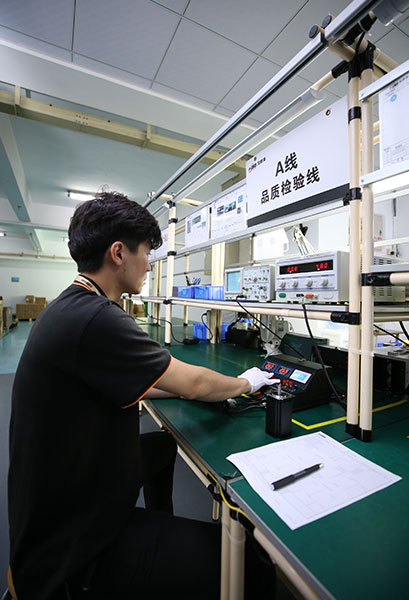
ISO quality systems
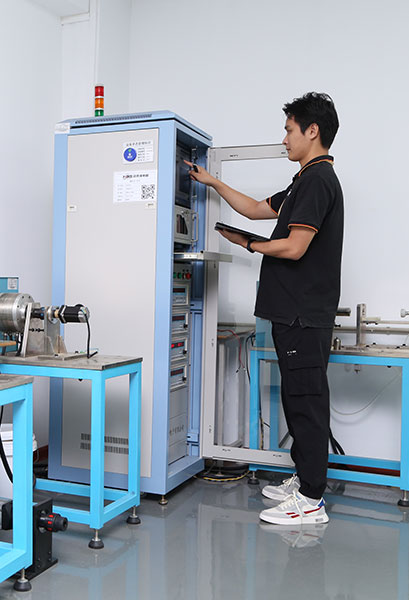
Torque test consistency
Driver compatibility
Export experience
OEM customization responsiveness
For detailed sizing methodology, consult our engineering parameter selection guide for deeper calculations rather than relying only on catalog nominal ratings.
Technical Specification Factors
| Parameter | What Buyers Should Verify |
|---|---|
| Holding Torque | Actual test data |
| Current Rating | Driver matching |
| Step Angle | Position accuracy |
| Temperature Rise | Thermal reliability |
| Gear Ratio | Load suitability |
Manufacturer Capability: Standard Catalog vs Custom Engineering
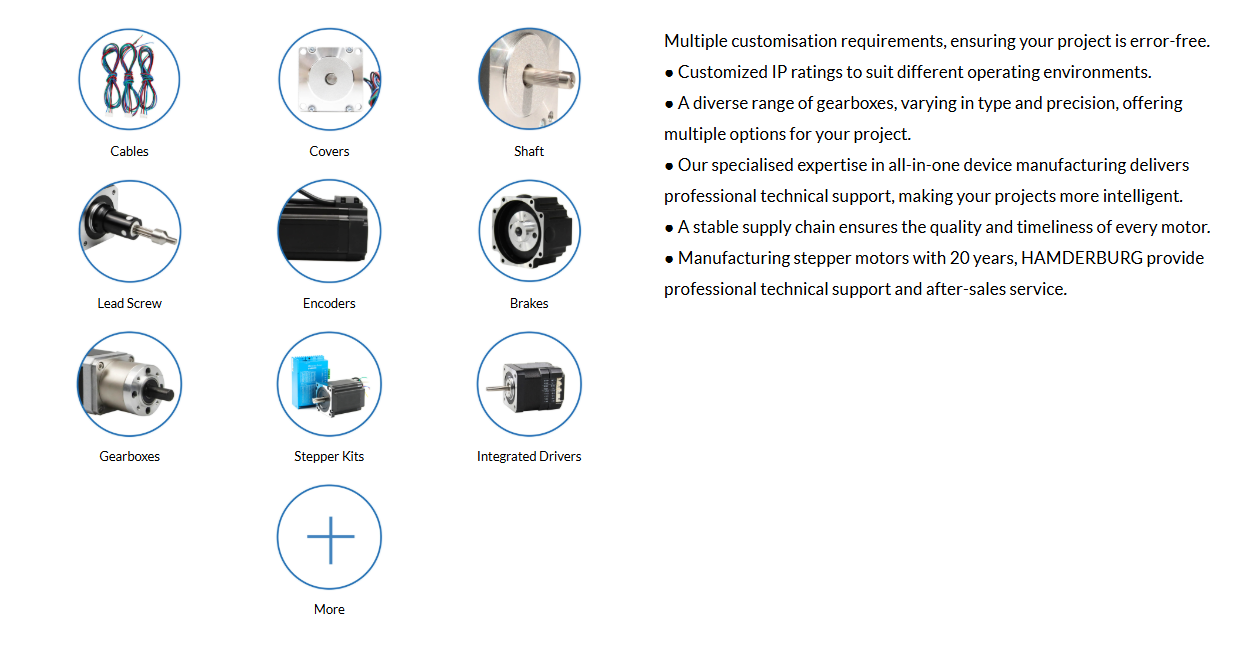
Many suppliers can sell standard NEMA 17 or NEMA 23 motors. Fewer can support custom shafts, brake integration, encoders, or application-driven winding changes.
This is where comparing stepper against other architectures matters. For broader motion architecture decisions, see our deeper reading on stepper versus servo engineering comparison.
CTA: If your project requires custom torque-speed matching, request drawings and application review before RFQ release.
Integrated Motion, Gearboxes, and Value-Added Assemblies
A supplier offering only bare motors may increase integration burden. Increasingly, OEMs prefer suppliers capable of delivering motors with gearheads, drivers, and integrated assemblies.
For compact high-torque transmission applications, review options involving planetary gearbox integration when direct-drive torque density is insufficient.
AGV drive modules
Valve actuators
Medical dosing equipment
Compact robotics joints
Control Electronics and Driver Support Matter
Many sourcing failures happen at driver level, not motor level. Poor current tuning, resonance control, or communication support causes field issues.
Ask suppliers whether they support pulse control, closed-loop upgrades, CANopen, Modbus, or controller integration.
For practical control-side authority, see stepper control methods with Arduino as supplementary technical reference.
Additional reading: effective stepper speed control methods.
Pricing vs Total Cost of Ownership
Failure rate risk
Lead-time reliability
Support response
Driver matching errors
Requalification costs
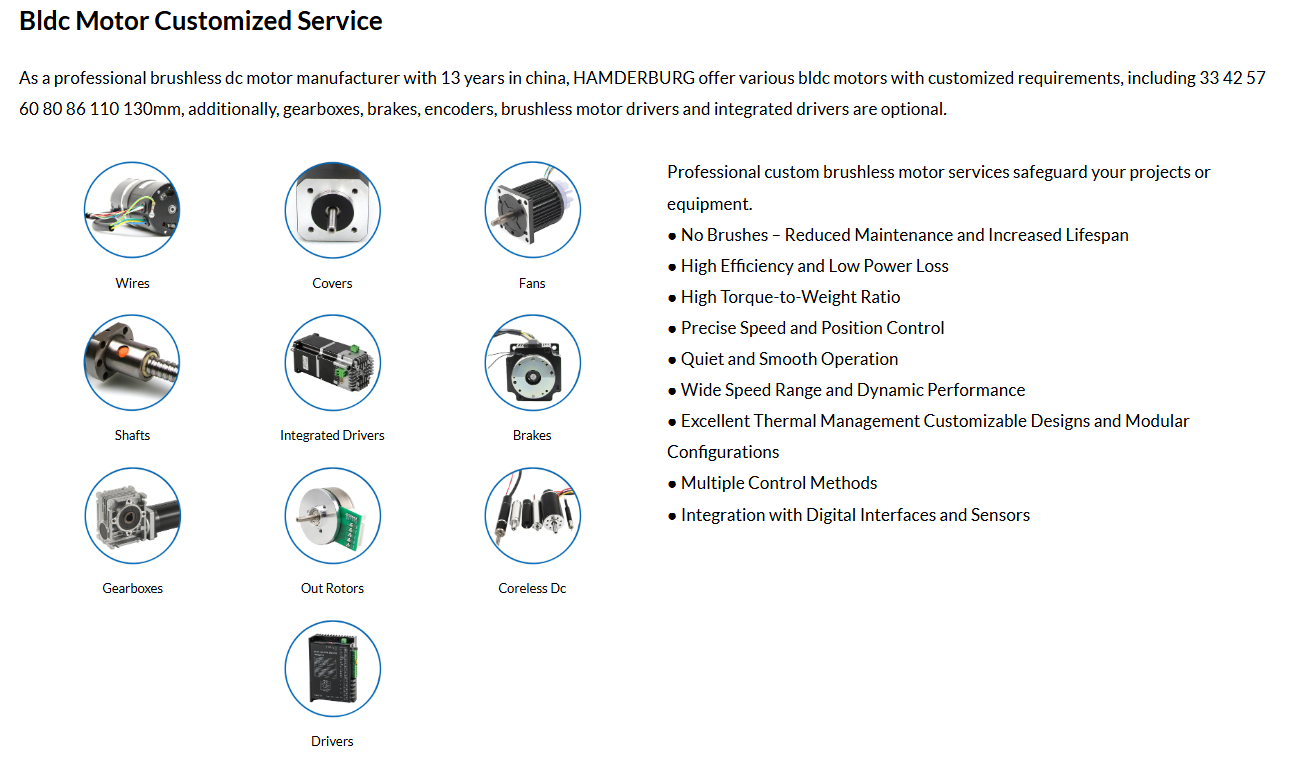
Sometimes alternative technologies may improve efficiency at system level. For some high-speed or quieter applications, compare brushless DC motor technology before locking specification.
Common Risks When Buying from China
Selecting only by Alibaba price
Ignoring torque test curves
No PPAP-style validation
No driver compatibility review
No pilot order before volume release
Mitigation Strategy
Start with samples
Validate performance
Audit process controls
Review export documentation
Scale only after qualification
Why HDBMotor Is Often Included in Buyer Shortlists
Custom engineering support
Broad motion portfolio
Multi-technology sourcing
OEM-oriented support model
Application-focused selection guidance
CTA BLOCK: Need help comparing manufacturers or validating a motion specification? Contact HDBMotor for engineering support and supplier evaluation assistance.
Frequently Asked Questions
Which Chinese stepper motor manufacturer is best for OEM projects?
The best supplier depends on torque requirements, customization depth, driver compatibility, and project volume.
Are Chinese stepper motor manufacturers reliable?
Many are highly reliable, especially suppliers with strong export history and ISO systems.
Should I choose a manufacturer with driver capability?
Yes. Motor-driver compatibility is a major factor.
What certifications should I verify?
Common requirements include ISO9001, CE, and RoHS.
Are planetary geared stepper motors worth considering?
For high torque in compact spaces, geared stepper assemblies can be very effective.
When should I consider BLDC instead of stepper?
For high-speed or efficiency-focused applications, BLDC may be worth evaluating.
Conclusion
Choosing among the top 25 stepper motor manufacturers in China requires more than comparing catalogs. The strongest sourcing decisions balance engineering performance, supply reliability, driver support, and long-term application fit.
For OEM buyers, the right supplier is not simply the lowest-cost factory, but the one that can support product performance through design, validation, and scalable production.