

Selecting the right gearbox stepper motor manufacturer is not simply about comparing prices. For engineers, OEM buyers, and automation integrators, the decision often involves torque density, backlash, efficiency, integration flexibility, and long-term supply stability.
A gearbox stepper motor combines a stepper motor with an integrated reduction gearbox to deliver higher output torque, lower speed, and improved positioning performance. These motors are widely used in robotics, industrial automation, AGV systems, medical devices, and compact motion control applications.
Compared with separate motor-reducer assemblies, integrated geared stepper motors reduce installation complexity, improve alignment, and simplify system integration.
Why Choose a Gearbox Stepper Motor?
Gearbox stepper motors are commonly used when applications require torque multiplication, controlled low-speed motion, or higher output resolution.
Higher output torque
Lower speed, smoother motion
Improved positioning resolution
Compact integration
Reduced system complexity
For broader motion architecture evaluation, many engineers also compare open-loop stepper motor solutions during system design.
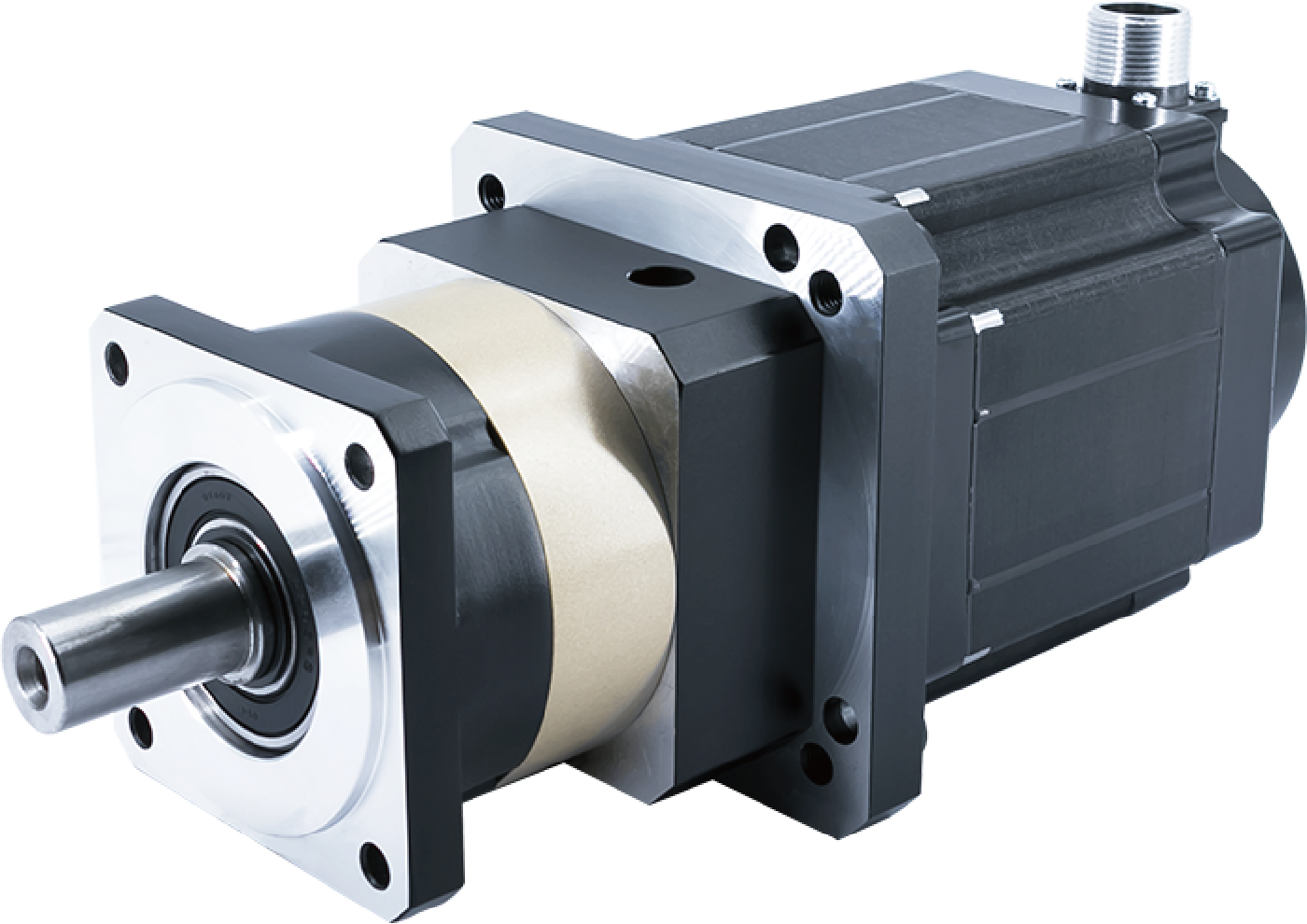

Types of Gearbox Stepper Motors
Different gearbox structures deliver different tradeoffs in torque density, efficiency, backlash, and service life.
| Gear Type | Torque Output | Efficiency | Backlash | Typical Applications |
|---|---|---|---|---|
| Planetary | High | 90-97% | Low | Robotics, AGV, CNC |
| Worm | Very High | 50-85% | Medium | Lifting, Vertical Loads |
| Spur | Medium | 80-92% | Medium | General Automation |
Many buyers evaluating compact transmission solutions consider planetary gearbox integration for precision automation.
For NEMA dimensional references, engineers may review NEMA standards resources.
Key Specifications to Consider
Selection should include:
NEMA frame size
Gear ratio (5:1–1000:1)
Backlash requirements
Rated output torque
Driver compatibility
For deeper parameter calculations, see our engineering parameter selection guide.
For advanced control methods, engineers may also review stepper motor control methods.
How to Select the Right Gearbox Type
Selection typically follows:
Define load
Define speed
Calculate torque
Select frame size
Choose gear ratio
Verify backlash
Match driver
For architecture comparison, see stepper versus servo motor selection.
Industry Trends Driving Demand
Industrial robotics and automation growth continue driving demand for compact high-torque motion solutions.
| Industry | Typical Reduction Ratio | Torque Requirement | Common Gear Type |
|---|---|---|---|
| AGV Steering | 20:1-50:1 | Medium-High | Planetary |
| Robot Joint | 30:1-100:1 | High | Planetary |
| Vertical Lift | 50:1-300:1 | Very High | Worm |
| Medical Pump | 10:1-30:1 | Low-Medium | Spur |
For international efficiency references, engineers may review IEC technical standards.
Our Capabilities as a Gearbox Stepper Motor Manufacturer
Custom gear ratios
Custom shafts and flanges
Encoder integration
Brake options
Integrated motion solutions
OEM/ODM engineering support
For higher-speed alternatives, engineers may compare brushless DC motor technology.
Typical Applications
Industrial automation
Robotics
AGV systems
Medical devices
Smart electromechanical devices
Get a Custom Gearbox Stepper Motor Quote Now
Looking for an OEM/ODM gearbox stepper motor manufacturer?
We support custom geared stepper motor solutions for automation, robotics, and industrial motion systems.
Application review
Gearbox selection support
Prototype recommendations
Custom design consultation
Volume production quotations
Contact Our OEM/ODM Geared Stepper Motor Manufacturer Today.
Frequently Asked Questions
What is the difference between planetary and worm gearbox stepper motors?
Planetary gearbox stepper motors offer higher efficiency, lower backlash, and are ideal for robotics and precision automation. Worm gearbox stepper motors provide higher reduction ratios and self-locking capability, making them suitable for vertical loads.
How do I choose the right gear ratio for a gearbox stepper motor?
Gear ratio selection depends on output torque, target speed, load inertia, and positioning requirements.
Are gearbox stepper motors better than servo motors?
It depends on the application. Gearbox stepper motors are often preferred for cost-effective positioning, while servo systems may be better for dynamic closed-loop motion.
Can a gearbox stepper motor be customized for OEM applications?
Yes. Many manufacturers support custom gear ratios, shafts, encoder integration, brakes, and electrical interfaces.