

High RPM brushless DC motors are widely used in modern automation systems where speed, efficiency, and reliability are critical. Compared to traditional brushed motors, brushless designs eliminate mechanical commutation, enabling higher rotational speeds, reduced maintenance, and improved thermal performance. For engineers, OEM buyers, and system integrators, selecting the right high-speed BLDC motor requires a clear understanding of torque characteristics, control methods, thermal limits, and integration requirements.
This guide explains the technical considerations, selection criteria, and application insights to help you choose the right motor solution. It also highlights how industrial buyers can evaluate suppliers and align motor specifications with real-world operating conditions.
What Is a High RPM Brushless DC Motor?
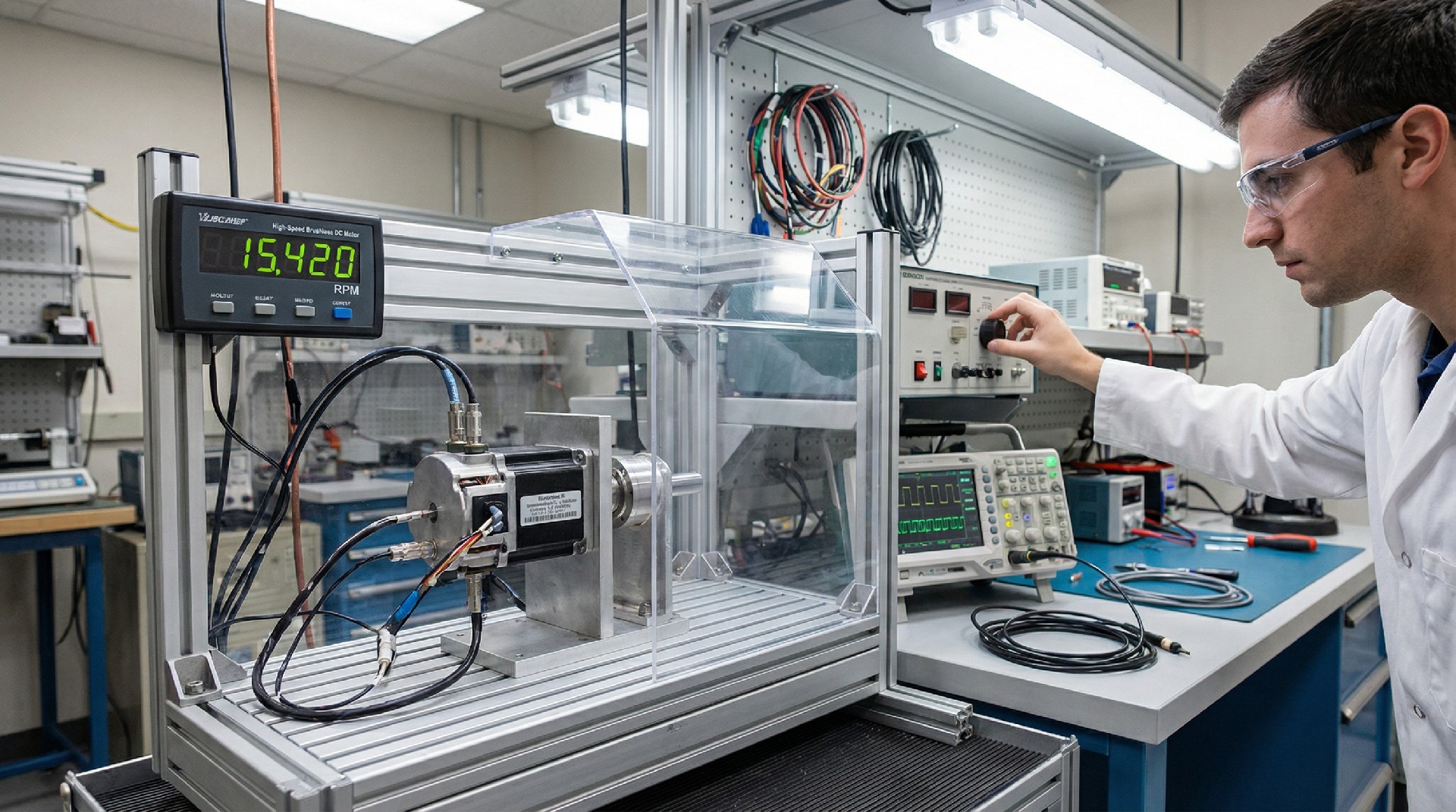
A high RPM brushless DC motor is a type of electronically commutated motor designed to operate at significantly higher rotational speeds than standard motors. Typically, these motors can reach tens of thousands of RPM depending on design, voltage, and load conditions. Instead of using brushes and a mechanical commutator, BLDC motors rely on electronic controllers to switch current in the windings, ensuring smooth and efficient operation.
These motors are commonly used in applications such as drones, CNC machines, medical devices, robotics, and high-speed spindles. Their ability to maintain consistent performance at high speeds makes them ideal for precision-driven systems. For a deeper understanding of their operating principles, engineers often refer to foundational concepts of brushless DC motor technology, which explains how electronic commutation replaces traditional brush mechanisms.
One of the defining features of high RPM BLDC motors is their power-to-weight ratio. By eliminating brushes, friction losses are minimized, allowing more efficient energy conversion and reduced heat generation. This makes them suitable for continuous operation in demanding industrial environments.
Key Advantages of High RPM BLDC Motors
High RPM brushless DC motors offer several advantages that make them preferable for modern industrial applications. These benefits extend beyond speed and include efficiency, durability, and controllability.
| Feature | Benefit |
|---|---|
| No Brushes | Reduced maintenance and longer lifespan |
| High Efficiency | Lower energy consumption and heat generation |
| High Speed Capability | Suitable for high RPM applications like spindles |
| Precise Control | Compatible with advanced motor drivers and feedback systems |
| Low Noise | Smoother operation compared to brushed motors |
In industrial systems, these advantages translate into higher uptime, lower operational costs, and improved performance consistency. When paired with appropriate controllers, BLDC motors can achieve fine speed regulation and torque stability across a wide RPM range.
For applications requiring additional torque or compact transmission, integration with a planetary reduction motor system can help optimize output characteristics while maintaining compact dimensions.
High RPM Motor Performance Characteristics
When evaluating high RPM brushless DC motors, several performance parameters must be considered. These include rated speed, torque curve, voltage range, efficiency, and thermal limits. High-speed motors typically operate with lower torque at maximum RPM, so balancing torque and speed is essential.
Another critical factor is the motor’s KV rating (RPM per volt), which determines how fast the motor spins at a given voltage. Higher KV values correspond to higher speeds but lower torque per ampere. Engineers must align KV ratings with system voltage and load requirements to avoid performance mismatch.
In many industrial systems, motor performance must be matched with mechanical load characteristics and system dynamics. For open-loop or feedback-controlled systems, selecting the appropriate motor type is essential. In such cases, open-loop architectures like those discussed in two-phase open-loop motor solutions are often compared with closed-loop BLDC configurations depending on precision requirements.
Comparison: BLDC vs Other Motor Types
Choosing a high RPM motor often involves comparing BLDC motors with alternatives such as brushed DC motors, stepper motors, and servo systems. Each technology has unique strengths depending on application needs.
| Motor Type | Speed Capability | Efficiency | Control Complexity | Typical Use Cases |
|---|---|---|---|---|
| Brushless DC Motor | Very High | High | Moderate | Robotics, drones, CNC |
| Brushed DC Motor | Medium | Moderate | Low | Simple automation |
| Stepper Motor | Low to Medium | Moderate | Low to Moderate | Positioning systems |
| Servo Motor | High | High | High | Precision motion control |
For engineering teams evaluating motion systems, it is common to refer to a comprehensive motor selection guide comparing stepper and servo systems to determine the most suitable architecture. While BLDC motors excel in speed and efficiency, servo systems may be preferred where closed-loop precision is required.
Control Systems and Driver Requirements
High RPM BLDC motors require electronic controllers (ESCs or motor drivers) to regulate commutation and speed. These controllers manage phase switching based on rotor position, which can be detected via sensors (Hall effect sensors) or sensorless algorithms.
Advanced control techniques such as field-oriented control (FOC) enable smoother torque delivery and improved efficiency at varying speeds. Proper driver selection is critical to ensure stable operation at high RPM levels, especially under load fluctuations.
In some industrial setups, motion control strategies may involve programmable systems or microcontrollers. Engineers often explore integration approaches similar to motor control using microcontrollers and embedded systems, even when adapting concepts to BLDC control environments.
Driver compatibility, voltage range, and current handling capacity must all align with motor specifications to avoid overheating, instability, or reduced lifespan.
Thermal Management and Reliability Considerations
High RPM operation generates heat due to electrical losses and mechanical friction. Effective thermal management is essential to maintain performance and prevent damage. This includes proper heat dissipation through motor housing design, airflow, or external cooling systems.
Operating a motor beyond its thermal limits can lead to insulation degradation, magnet demagnetization, and reduced efficiency. Therefore, engineers must consider duty cycle, ambient temperature, and load conditions during system design.
In industrial environments, reliability is often enhanced by selecting motors with robust insulation classes and efficient heat dissipation structures. For applications involving continuous operation, it is also important to consider load profiles and system duty cycles to avoid overheating scenarios.
Selection Criteria for Industrial Buyers
When selecting a high RPM brushless DC motor, buyers should evaluate both electrical and mechanical parameters. The goal is to ensure compatibility with system requirements while optimizing performance and cost.
| Criteria | Description |
|---|---|
| Speed Range | Ensure motor meets required RPM under load |
| Torque Output | Match torque curve with application load |
| Voltage Rating | Compatible with power supply system |
| Control Method | Sensorless or sensored BLDC control |
| Thermal Limits | Adequate cooling and insulation class |
| Mechanical Integration | Shaft type, mounting, and gearbox compatibility |
In some cases, engineers may need to combine high-speed motors with gearing systems to achieve desired output characteristics. This is where solutions such as planetary gearbox integration become valuable for balancing speed and torque.
Application Scenarios
High RPM brushless DC motors are used across a wide range of industries due to their versatility and performance advantages. Common applications include:
High-speed CNC spindles
Robotics and automation arms
Medical devices such as centrifuges
Drone propulsion systems
Industrial fans and blowers
In robotics and automation, BLDC motors are often preferred for their smooth operation and high efficiency. For more advanced robotic applications, engineers may also explore system-level implementations discussed in robotic and commercial BLDC motor applications.
Each application requires careful consideration of load, speed, and environmental conditions to ensure optimal performance and long-term reliability.
Conclusion
High RPM brushless DC motors are essential components in modern industrial and automation systems. Their ability to deliver high speed, efficiency, and precise control makes them ideal for a wide range of demanding applications. However, selecting the right motor requires careful evaluation of performance parameters, control systems, and thermal management considerations.
For OEM buyers and engineers looking for reliable sourcing, partnering with an experienced manufacturer is critical. A trusted brushless DC motor supplier can provide customized solutions tailored to specific application needs.
To explore customized designs, engineering support, and OEM services, consider reviewing OEM customization solutions. For project discussions, specifications, or bulk inquiries, you can also reach out through the contact page to connect with technical experts.
Frequently Asked Questions
What is considered a high RPM for a brushless DC motor?
High RPM typically refers to motors operating above 10,000 RPM, though some specialized designs can exceed 50,000 RPM depending on voltage, load, and construction.
Are high RPM BLDC motors more efficient than brushed motors?
Yes, BLDC motors are generally more efficient because they eliminate brush friction and reduce electrical losses, resulting in better energy conversion and lower maintenance.
Do high RPM motors require special controllers?
Yes, they require electronic speed controllers (ESCs) or motor drivers capable of handling commutation, speed regulation, and current control at high frequencies.
Can high RPM BLDC motors run continuously?
They can run continuously if properly designed with adequate cooling and operated within rated temperature and load limits.
How do I choose the right high RPM motor for my application?
You should consider torque requirements, speed range, voltage compatibility, thermal conditions, and mechanical constraints. Consulting engineering selection guides and supplier datasheets is highly recommended.
What industries commonly use high RPM brushless DC motors?
They are widely used in robotics, CNC machining, aerospace, medical equipment, and industrial automation systems.
Is gearbox integration necessary for high RPM motors?
In some applications, gearboxes are used to trade speed for torque. Planetary gear systems are commonly used when compact size and high torque output are required.
Conclusion Summary
High RPM brushless DC motors provide a powerful combination of speed, efficiency, and durability. By understanding key selection parameters and aligning motor specifications with application requirements, engineers can achieve optimal system performance. Working with experienced suppliers ensures better customization, technical support, and long-term reliability for industrial projects.