

Introduction
When engineers and OEM buyers evaluate motion control systems, one of the most critical factors is price. The debate between stepper motors and servo motors is not just about performance—it’s about cost efficiency, scalability, and long-term ROI.
At first glance, stepper motors appear significantly cheaper. However, servo systems promise higher precision, efficiency, and speed. So which option actually delivers better value?
This guide breaks down the real cost differences, including hidden expenses, system complexity, and application-specific considerations—helping you make a smarter buying decision.
Stepper Motor vs Servo Motor Price Overview
| Motor Type | Typical Price Range | Control System | Complexity |
|---|---|---|---|
| Stepper Motor | Low ($20–$200) | Open-loop | Simple |
| Servo Motor | High ($200–$2000+) | Closed-loop | Complex |
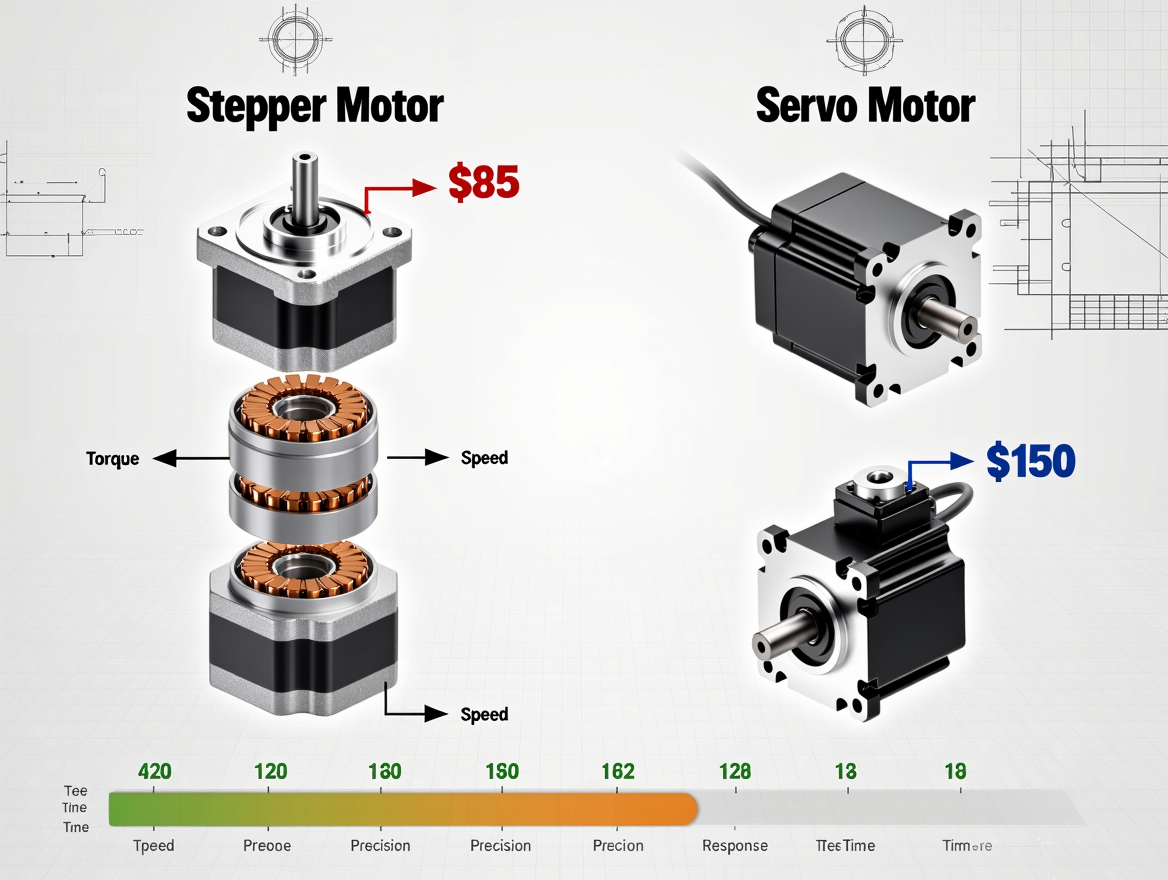
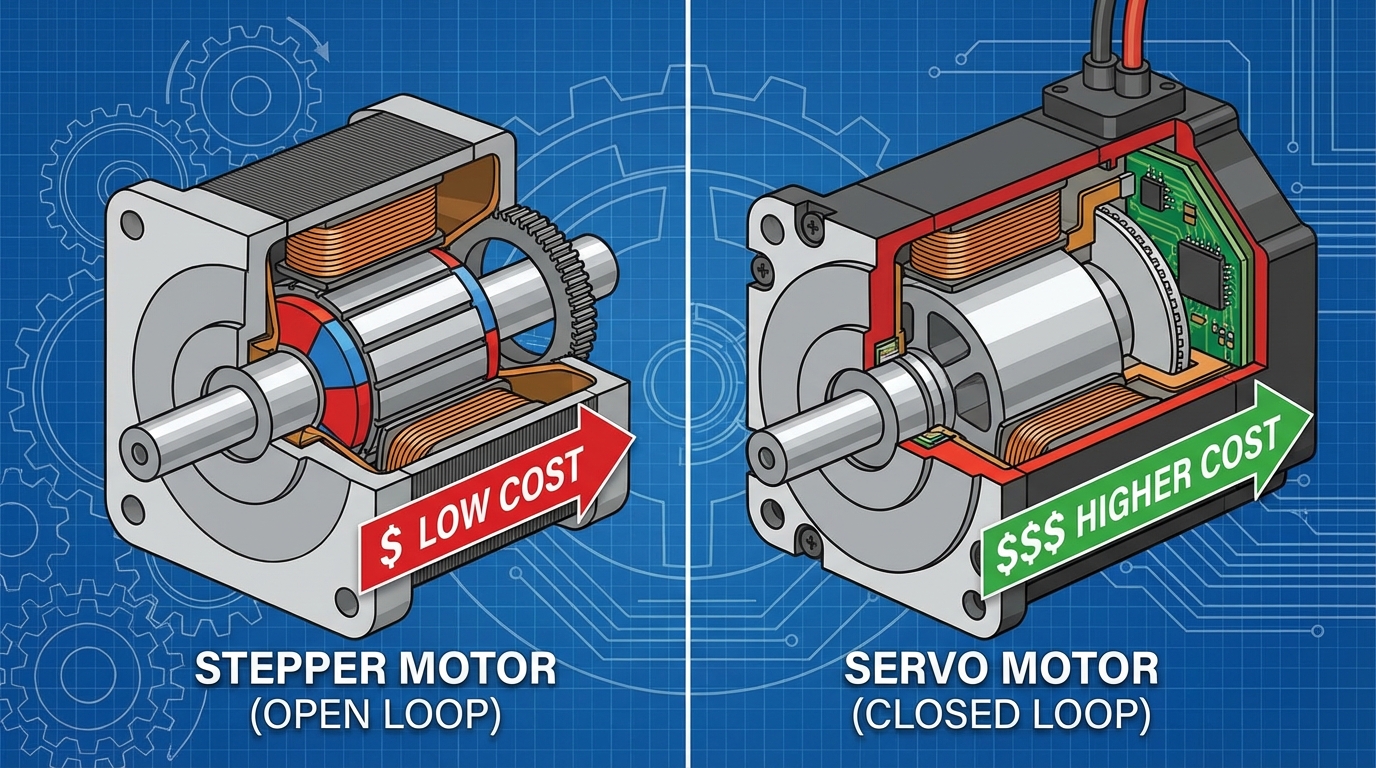
Stepper motors are cheaper because they operate using open-loop control, eliminating the need for feedback systems.
For example, many industrial applications rely on open-loop stepper motor solutions to reduce system cost while maintaining acceptable accuracy.
Servo motors, on the other hand, require encoders, advanced drivers, and closed-loop control algorithms, significantly increasing system cost.
Quick Insight: Stepper motors are typically 30–70% cheaper upfront, but price alone doesn’t tell the full story.
What Drives the Cost Difference?
The price gap between stepper and servo motors comes down to engineering complexity.
Stepper Motor Cost Structure:
Simple electromagnetic design
No feedback system
Lower manufacturing cost
Basic driver requirements
Servo Motor Cost Structure:
Encoder or resolver integration
High-performance controllers
Precision machining
Advanced firmware
Servo motors are essentially smart systems, while stepper motors are mechanical execution devices.
For a deeper engineering comparison, refer to this motion control comparison guide.
Hidden Costs Beyond the Motor Price
Focusing only on motor price is a common mistake. The total system cost includes:
1. Driver & Controller Costs
Stepper drivers are simple and low-cost, while servo drives are more expensive and require tuning.
If you're integrating control systems, understanding stepper motor control methods can significantly reduce development cost.
2. Installation & Tuning
Stepper: Plug-and-play
Servo: Requires tuning and expertise
3. Maintenance Costs
Stepper: Minimal maintenance
Servo: Requires calibration and monitoring
4. Energy Consumption
Servo motors are more efficient at high speeds, but stepper motors can be more cost-effective in low-speed applications.
Performance vs Price: Is Servo Worth It?
| Feature | Stepper Motor | Servo Motor |
|---|---|---|
| Speed | Moderate | High |
| Accuracy | Good | Excellent |
| Efficiency | Lower | Higher |
| Torque at High Speed | Drops | Stable |
Servo motors excel in high-speed automation, dynamic load environments, and precision robotics.
Meanwhile, stepper motors are ideal for positioning systems, low-speed automation, and cost-sensitive applications.
For applications requiring compact torque, combining motors with planetary gearbox integration can dramatically improve performance without switching to servo systems.
Application-Based Cost Comparison
Choosing between stepper and servo depends heavily on application requirements.
Best Use Cases for Stepper Motors:
3D printers
CNC entry-level machines
Medical devices
Labeling systems
Best Use Cases for Servo Motors:
Robotics
Packaging automation
High-speed conveyors
CNC machining centers
In many industrial systems, engineers now adopt hybrid strategies—using stepper motors for cost-sensitive axes and servo motors for high-performance axes.
Additionally, in applications where energy efficiency and quiet operation are critical, brushless DC motor technology can be an alternative worth considering.
Cost Optimization Strategies for Buyers
If your goal is to reduce system cost without sacrificing performance, consider these strategies:
1. Use Stepper Motors Where Possible
Evaluate if your application truly requires closed-loop control.
2. Optimize Motor Sizing
Oversized motors increase unnecessary cost.
Use this engineering parameter selection guide to properly size your motor.
3. Add Gearboxes Instead of Upgrading Motors
Gearboxes can increase torque at a lower cost than switching to servo systems.
4. Simplify Control Systems
Reducing system complexity lowers both hardware and engineering costs.
Total Cost of Ownership (TCO) Comparison
| Cost Factor | Stepper Motor | Servo Motor |
|---|---|---|
| Initial Cost | Low | High |
| Maintenance | Low | Medium |
| Energy Efficiency | Medium | High |
| Lifespan | Medium | High |
| System Complexity | Low | High |
Key Insight:
Stepper = Lower upfront cost
Servo = Better long-term efficiency in demanding environments
The right choice depends on your application lifecycle and performance requirements.
When Should You Choose Stepper Over Servo?
Choose stepper motors if:
Budget is limited
Speed requirements are moderate
Simplicity is preferred
Load conditions are stable
Choose servo motors if:
Precision is critical
Speed is high
Dynamic loads exist
Efficiency matters long-term
For most cost-sensitive industrial applications, stepper motors remain the best entry-level solution.
Frequently Asked Questions
What is the main price difference between stepper and servo motors?
Stepper motors are typically 30–70% cheaper due to simpler design and lack of feedback systems, while servo motors include advanced components that increase cost.
Are servo motors always better than stepper motors?
No. Servo motors offer better performance, but stepper motors are more cost-effective for many applications.
Why are servo motors more expensive?
They require encoders, advanced drivers, and closed-loop control systems, increasing both manufacturing and system costs.
Can a stepper motor replace a servo motor?
In many low-speed, stable-load applications, yes. However, high-speed or high-precision tasks may still require servo motors.
How can I reduce motor system cost?
Use properly sized stepper motors, simplify control systems, and consider gearboxes instead of upgrading to servo motors.
Is maintenance cost higher for servo motors?
Yes. Servo systems require calibration and monitoring, while stepper motors typically need minimal maintenance.
Conclusion
The decision between stepper and servo motors is ultimately a balance between cost and performance.
Stepper motors dominate in affordability, simplicity, and ease of integration, making them ideal for most cost-sensitive industrial applications.
Servo motors, while expensive, deliver unmatched performance in high-speed and precision-driven systems.
For OEM buyers and engineers, the smartest approach is not choosing one over the other—but selecting the right motor for the right job.