

Frameless Torque Motor Direct Drive Design
Frameless torque motor direct drive design has become a core technology in modern motion control systems where compact structure, high torque density, and ultra-high precision are required. By eliminating traditional housings, shafts, and gear transmissions, this motor design allows engineers to integrate the motor directly into the mechanical structure of the equipment, achieving smoother motion, higher efficiency, and greater design freedom.
In this article, we explain what a frameless torque motor is, how frameless torque motor direct drive design works, its structural features, major advantages, typical applications, and how to determine whether it is the right solution for your engineering project.
What Is a Frameless Torque Motor?
A frameless torque motor is a permanent magnet motor supplied without a housing, bearings, or output shaft. It consists only of a stator and a rotor, allowing it to be embedded directly into the mechanical system of a machine.
This approach removes the mechanical constraints of conventional motors and enables frameless torque motor direct drive design, where torque is delivered directly to the load without gears, belts, or couplings. The result is backlash-free motion, high stiffness, and improved system reliability.
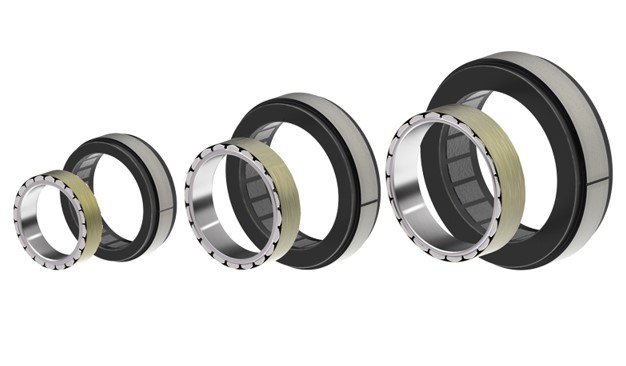
Structure of Frameless Torque Motor Direct Drive Design
Stator
The stator contains copper windings that generate an electromagnetic field when energized. It is typically mounted to a stationary structural component made of thermally conductive materials such as aluminum alloy to support efficient heat dissipation.
Rotor
The rotor is equipped with high-energy permanent magnets and is mounted directly onto the rotating shaft or load. Because the motor has no built-in bearings, bearing selection and alignment are fully controlled by the system designer.
This modular structure is the foundation of frameless torque motor direct drive design and enables unmatched flexibility in mechanical and thermal optimization.
How Frameless Torque Motors Work
Frameless torque motors operate on the same electromagnetic principles as traditional permanent magnet motors. When current flows through the stator windings, a rotating magnetic field is created. This field interacts with the rotor magnets, producing torque that drives rotation.
The key difference is that frameless torque motor direct drive design eliminates intermediate mechanical transmission components such as gearboxes or belts. This results in smoother motion, lower noise, higher efficiency, and superior positioning accuracy.
7 Powerful Advantages of Frameless Torque Motor Direct Drive Design
Compact system design: Direct integration reduces overall machine size and simplifies mechanical architecture.
High torque density: Delivers high continuous and peak torque in a compact form factor.
Exceptional positioning accuracy: Zero backlash ensures precise and repeatable motion.
Higher efficiency: Eliminating gear losses improves overall system efficiency.
Improved reliability: Fewer mechanical parts reduce wear and maintenance.
Flexible thermal management: Custom cooling solutions can be integrated into the machine structure.
High customization flexibility: Diameter, stack length, and winding configurations can be optimized.
Common Applications of Frameless Torque Motors
Robotics
Frameless torque motors are widely used in robotic joints and collaborative robots, where smooth motion, high torque, and compact design are critical.
Medical Devices
In surgical robots and precision medical equipment, frameless torque motor direct drive design enables quiet operation, high accuracy, and compact integration.
Aerospace and Defense
Lightweight and high torque density make these motors suitable for gimbal systems, UAV actuators, and flight control mechanisms.
Industrial Automation
Commonly used in rotary tables, direct-drive axes, and machine tool feed systems requiring high torque at low speed.
For additional background on torque motors, you may refer to Torque Motor Overview.
How to Choose the Right Frameless Torque Motor
Selecting the correct frameless torque motor requires careful evaluation of system requirements:
Torque and speed: Define continuous and peak torque as well as operating speed range.
Thermal conditions: Assess duty cycle and cooling methods such as air or liquid cooling.
Mechanical integration: Ensure precise coaxial alignment and appropriate bearing selection.
Control system compatibility: Verify compatibility with servo drives and feedback devices.
Why Frameless Torque Motor Direct Drive Design Matters
Frameless torque motor direct drive design allows engineers to achieve higher precision, higher efficiency, and greater design freedom at the same time. By removing traditional motor constraints, this technology enables optimized power density, reduced system complexity, and superior motion performance.
From medical robotics to heavy industrial automation, frameless torque motors provide a future-ready solution for demanding motion control applications where performance, reliability, and compactness are critical.
Recommended Articles:
What ls A Bipolar Stepper Motor And How Does lt Work
Why ls My Stepper Motor Making A Squealing Noise? 9 Proven Fixes
How To Make A Stepper Motor Rotate According To A Sine Wave Pattern?